
For families and caregivers
Helping a parent bathe safely in Arizona
Bathing is one of the first daily tasks to become hard, and one of the most personal to talk about. This guide is for the spouse, daughter, son or friend who has started to help.
- Since 2012
- Installed in as little as one day
- Install or supply-only, statewide
Direct answer: When a parent struggles to bathe, start with a calm conversation, an occupational therapy assessment and simple equipment such as grab bars, a handheld shower and a shower chair or transfer bench. In Arizona, family caregivers can ask their Area Agency on Aging about the Family Caregiver Support Program and respite, and call the Arizona Caregiver Coalition at 888-737-7494. A walk-in tub or curbless shower can come later, once you know what helps.
Notice
Signs that bathing has become hard
Many parents do not say out loud that the tub has become frightening. The signs show up in other ways, and they are easy to miss on a short visit.
- Bathing less often, or switching to sponge baths at the sink
- A bath mat that never seems to get used, or a tub full of stored items
- Bruises on the arms or hips, or a story about "slipping a little"
- Holding on to towel bars, the sink or the shower door to get in and out
- Avoiding the bathroom at night, or new worry about getting up from the toilet
- Taking a very long time to bathe, then needing to rest afterward
If you notice two or three of these, it is time to talk. That does not mean anything dramatic has to happen. It means the bathroom has become the place to focus first.
Talk
How to start the conversation
Bathing touches on privacy, independence and pride. People who would happily accept a ride to the doctor may bristle at an offer to help them shower. A few approaches tend to go better than others.
- Lead with their goal. Most older adults want to stay in their own home. Frame bathroom changes as a way to protect that: "I want to make sure you can keep living here the way you like."
- Ask before suggesting. "What part of bathing is the hardest right now?" often gets a more honest answer than "You need a walk-in tub."
- Start small. A grab bar and a handheld shower are easier to accept than a remodel, and they help right away.
- Bring in a professional. An occupational therapist's advice can carry more weight than a family member's, and it is based on watching how your parent really moves.
- Keep them in charge. Let your parent choose the shower chair, the grab bar finish or the day of the install. Small choices protect dignity.
OT
Ask for an occupational therapy visit
An occupational therapist (OT) is the single most useful person to involve. An OT can watch how your parent gets in and out of the tub, check strength and balance, and recommend specific equipment and grab bar positions. Medicare Part B covers outpatient occupational therapy when a doctor or other qualified provider certifies that it is needed, and after a hospital stay a home health OT visit may be part of the discharge plan. Ask your parent's doctor for a referral, and ask the hospital discharge planner before you leave.
Quick wins
Equipment that makes bathing safer now
These items are inexpensive and widely available. An OT can tell you which ones fit your parent best.
Grab bars
Anchored into studs or solid blocking at the tub entry, inside the tub and beside the toilet. Suction-cup bars are not a substitute.
Handheld shower
On a slide bar, so your parent can rinse while seated and you can help without getting soaked.
Shower chair or transfer bench
A transfer bench straddles the tub wall, so your parent sits outside the tub and slides across instead of stepping over.
Non-slip surfaces
A non-slip mat or treads in the tub, and a rubber-backed mat outside it.
Raised toilet seat
Makes standing up easier for people with weak knees or hips.
Lever handles and good light
Levers are easier for arthritic hands; bright, even light helps aging eyes.
Hands-on help
Bathing together: practical tips
If you are helping in person, a few habits keep everyone safe and comfortable.
- Prepare first. Gather towels, clothes, soap and shampoo before your parent undresses. Warm the room in winter; cool it in an Arizona summer.
- Check the water. Test the temperature with your wrist or a thermometer. In summer, the cold line can run warm, so baths may be hotter than you expect.
- Use a seat. Seated bathing is safer for most people who need help. Let your parent wash what they can, and help only where needed.
- Protect privacy. Offer a towel across the lap or shoulders, and talk through each step before you do it.
- Mind your own back. Do not lift. If your parent cannot stand or transfer with light help, that is a sign you need equipment, a second person or professional help.
- Take your time standing up. After a warm bath, have your parent sit for a moment, then rise slowly with a hand on a grab bar.
Support
Help for Arizona caregivers
You do not have to figure this out alone. Arizona has programs specifically for family caregivers.
| Resource | What it offers | How to reach it |
|---|---|---|
| Family Caregiver Support Program | Information, training, counseling and respite for family caregivers, delivered through the local Area Agency on Aging | Call the agency for your parent's county; see our Area Agencies on Aging guide |
| Arizona Caregiver Coalition | A resource line and, in recent years, respite reimbursement through a lifespan respite grant | 888-737-7494, or azcaregiver.org |
| ALTCS (AHCCCS long-term care) | For people with limited income who need a nursing-facility level of care; can include in-home services and home modifications through a case manager | Apply through AHCCCS |
| VA caregiver support | Support for caregivers of veterans, plus the HISA grant for medically needed home changes | Ask your parent's VA care team |
Sources: Arizona DES Family Caregiver Support Program; Arizona DES Area Agency on Aging locations.
Respite through the DES program is generally for caregivers of someone who needs substantial help with at least two daily activities, such as bathing and dressing, and the caregiver's own strain is assessed too. Rules and funding change, so ask what is available now.
Long-distance
Caring from far away
Many Arizona parents have children who live in another state, and many winter residents are far from family for half the year. Long-distance caregiving is hard, but bathroom safety is one area where you can do a lot remotely.
- Ask a neighbor or friend to send photos of the bathroom, the tub, the toilet and the path from the bedroom.
- Book an OT visit through your parent's doctor, and ask to join the follow-up call.
- Order the quick wins online and have a handyman or licensed contractor install grab bars properly.
- Join the quote call by phone. If a bigger change makes sense, we can talk with you and your parent at the same time and send the written quote to both of you.
- Plan install day around your visit, or name a trusted person to be there.
Next step
When it is time for a bigger change
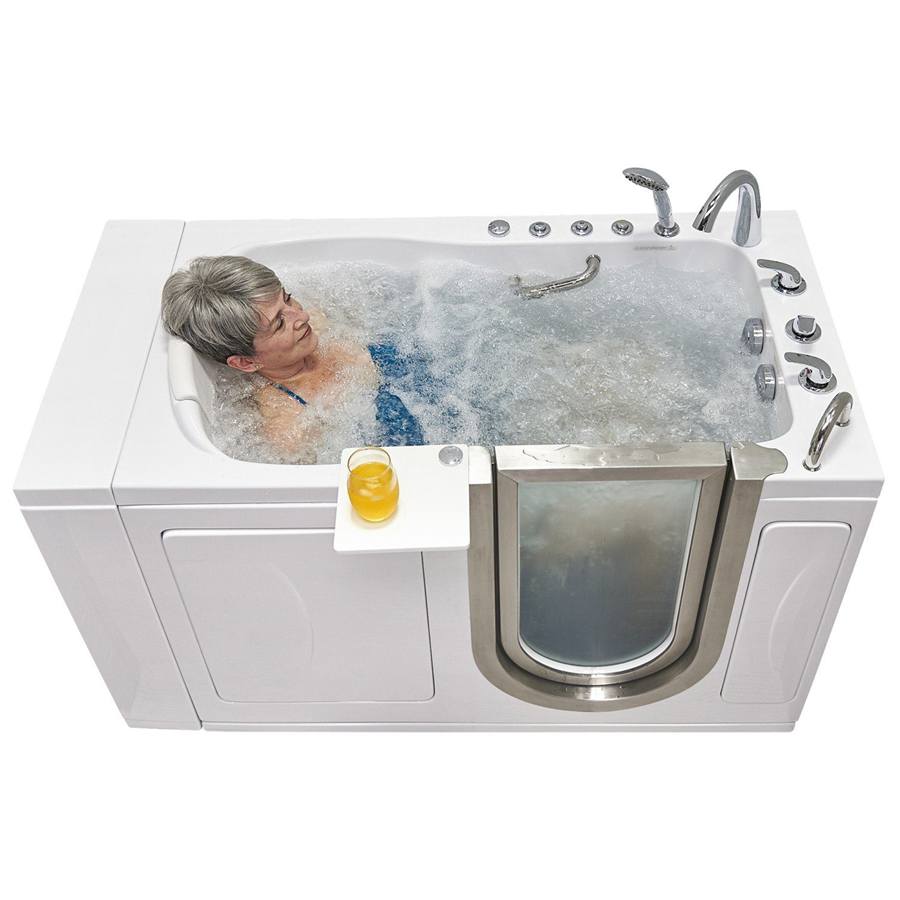
If the tub wall itself is the problem, equipment can only do so much. A walk-in tub lets your parent sit to bathe and step through a door rather than over a wall. A curbless or low-threshold shower avoids the step altogether and gives a caregiver room to help. Our tub or shower guide compares them, and the funding guide explains how VA grants and ALTCS can help pay.
FAQ
Caregiver questions
How do I know when my parent needs help bathing?
Common signs include bathing less often, bruises or stories about slipping, holding on to towel bars or the sink, and avoiding the bathroom at night. If you see a few of these, talk with your parent and ask the doctor about an occupational therapy assessment.
Does Medicare pay for an occupational therapist to look at bathing?
Medicare Part B covers outpatient occupational therapy when a doctor or other qualified provider certifies it is needed. After a hospital stay, home health therapy may also be part of the plan. Ask the doctor or discharge planner.
What help is there for family caregivers in Arizona?
The Family Caregiver Support Program, run through each Area Agency on Aging, offers information, training, counseling and respite. The Arizona Caregiver Coalition runs a resource line at 888-737-7494. ALTCS and VA caregiver programs may also help, depending on eligibility.
Is a tub transfer bench a good first step?
For many people, yes. A transfer bench lets your parent sit outside the tub and slide across, instead of stepping over the wall. Pair it with a handheld shower and grab bars, and ask an OT whether it suits your parent.
Should I lift my parent in and out of the tub?
No. Lifting risks injury to both of you. If your parent cannot transfer with light help, you need equipment, a second person or professional support, and it may be time for a curbless shower.
Can you work with me if I live out of state?
Yes. You can join the quote call by phone, review photos and the written quote by email, and choose an install day when you or a trusted person can be there.
Helping from a distance? We can work with you remotely.
Join the quote call by phone, review photos and the written quote by email, and decide together on your own schedule.